
ETCN Adult Schools use a concierge
approach to better aid adult learners
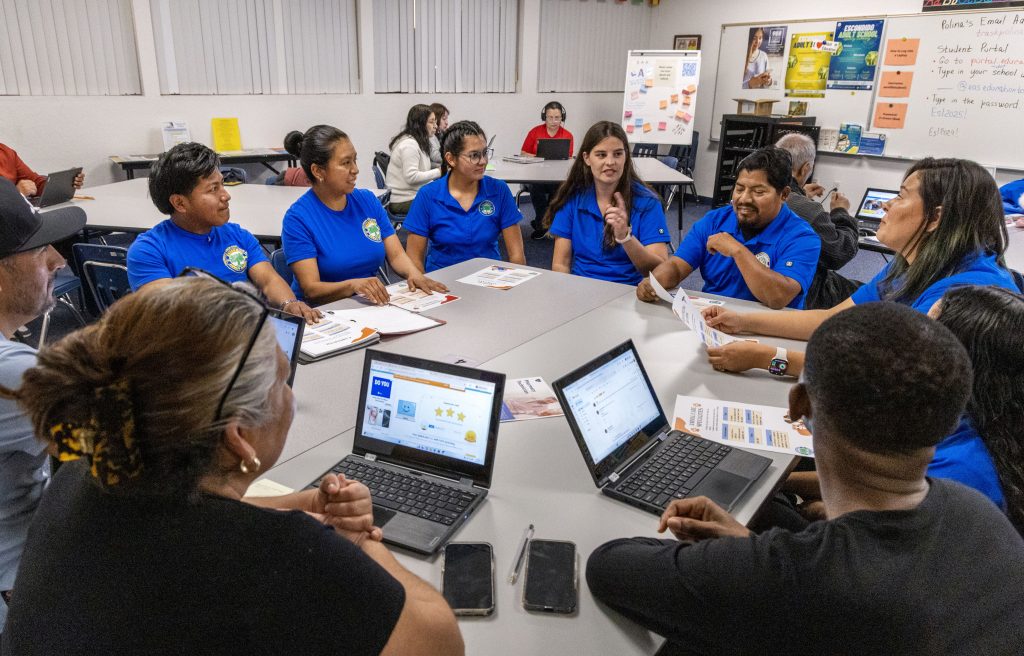
The Education to Career Network (ETCN) is centered around student experiences, by offering student services, educational programs, and opportunities for community engagement. This is in keeping with the “Student Concierge Approach,” one of “Seven Converging Promising Practices” that ETCN member schools incorporate in the interest of helping students have positive outcomes, whether their goals are transitioning to further education or entering the workforce.
The Seven Converging Promising Practices were introduced in Spring 2024 and developed by studying 12 California adult schools with exceptional student performance and employment results, especially for students of color. These practices are gaining traction with the California Community Colleges, California Department of Education, and the California Adult Education Program.
In the context of education, this approach means using a model based on providing personalized support and guidance for students. This support goes beyond just academics, with focus also being put on dealing with administrative and personal obstacles a student may face through proactive and tailored support. This approach sees dedicated individuals and teams working to better facilitate student success, whether they plan to transition to the workforce or move forward on their educational journey.
Helping hands
A prime example of the Student Concierge Approach in action is the Escondido Adult School’s (EAS) Student Ambassador program, in which international students are given the opportunity to give back to their fellow adult learners while also improving their own language skills.
The program relies on students who have completed ESL courses to help guide new students as they ease into student life. They help with registration, assist with courses, and organize events.
“I always loved to volunteer and help other people,” says Maritere Rodriguez, a Student Ambassador at the school. “I can help you with chemistry, I can help you with biology, and that way we can make your process easier.”
Fellow Student Ambassador Cynthia Arvizu, also from Mexico, says that in addition to being able to help others, the program is also a good way for her and her fellow ambassadors to continue improving their English and build confidence in their communication skills.
“I want to continue studying English because I want to be more comfortable talking with other people,” Arvizu says. “Being able to talk with other people in the language has been a good way to keep up with it.”
The Student Ambassador program exemplifies the Student Concierge approach, as it encourages students to help one another by guiding them to various services provided by the school and navigating what courses they’ll need to meet their goals. The program also provides an important link to the community by showing what opportunities are available by exposing them to students who have already experienced them.
Personalized plans
Another great example of the Concierge Approach in practice can be seen in ETCN schools’ approach to student advising, which helps students draft a personalized roadmap to guide them along their educational journey. Pam Garramone, the Assistant Director of Poway Adult School (PAS), details how her school and other ETCN institutions utilize advisors to better help students.
“We have two ESL student advisors, a School Counselor and a Career Education Specialist who meet with the students. They go over the students’ goals with them and what they want to do in the future,” Garramone says. “The team looks at their test scores, they find out if they need any services, check whether a student is there because they also need help finding a job, or if they want to go to college.”
Garramone also stresses that following up on a student’s needs and how they may change is a core part of them carrying out the student-focused approach.
“It’s one thing to reach out to a student and help them set a game plan for what they want to do,” Garramone says. “But obviously, a big part is making sure they’re following through with that, or if they still want to stay on that path. We have had many students who come to us for English language classes, then realize there is so much more we can help them with as they plan for their future.”
The benefits of the Student Concierge Approach can be seen across the whole of the ETCN. Since implementing the practice, ETCN schools have issued over 1,500 CTE certificates, seen over 1,300 career-improving outcomes, and enrolled more than 4,100 ESL students, according to information from TOPSpro Enterprises, the data management system used by ETCN.
Going beyond just numbers, the approach has enabled students like Rodriguez and Arvizu to feel more optimistic about their future while helping their fellow adult learners along their journey.
“The Escondido Adult School was a bridge for my life, for my future, and I’m always going to be grateful for that,” Rodriguez says.
“The Escondido Adult School was a bridge for my life, for my future, and I’m always going to be grateful for that.”
Maritere Rodriguez, Student, Escondido Adult School
The Education to Career Network is the largest adult education consortium in San Diego County. Its members include Escondido, Poway, Ramona, San Marcos, and Vista Adult Schools, as well as Palomar College. To learn more about ETCN and its members, visit educationtocareer.net.
Written by Jacob Peterson
| Regions | Classes & Topics |
|---|---|
| Southern California | English as a Second Language |
